


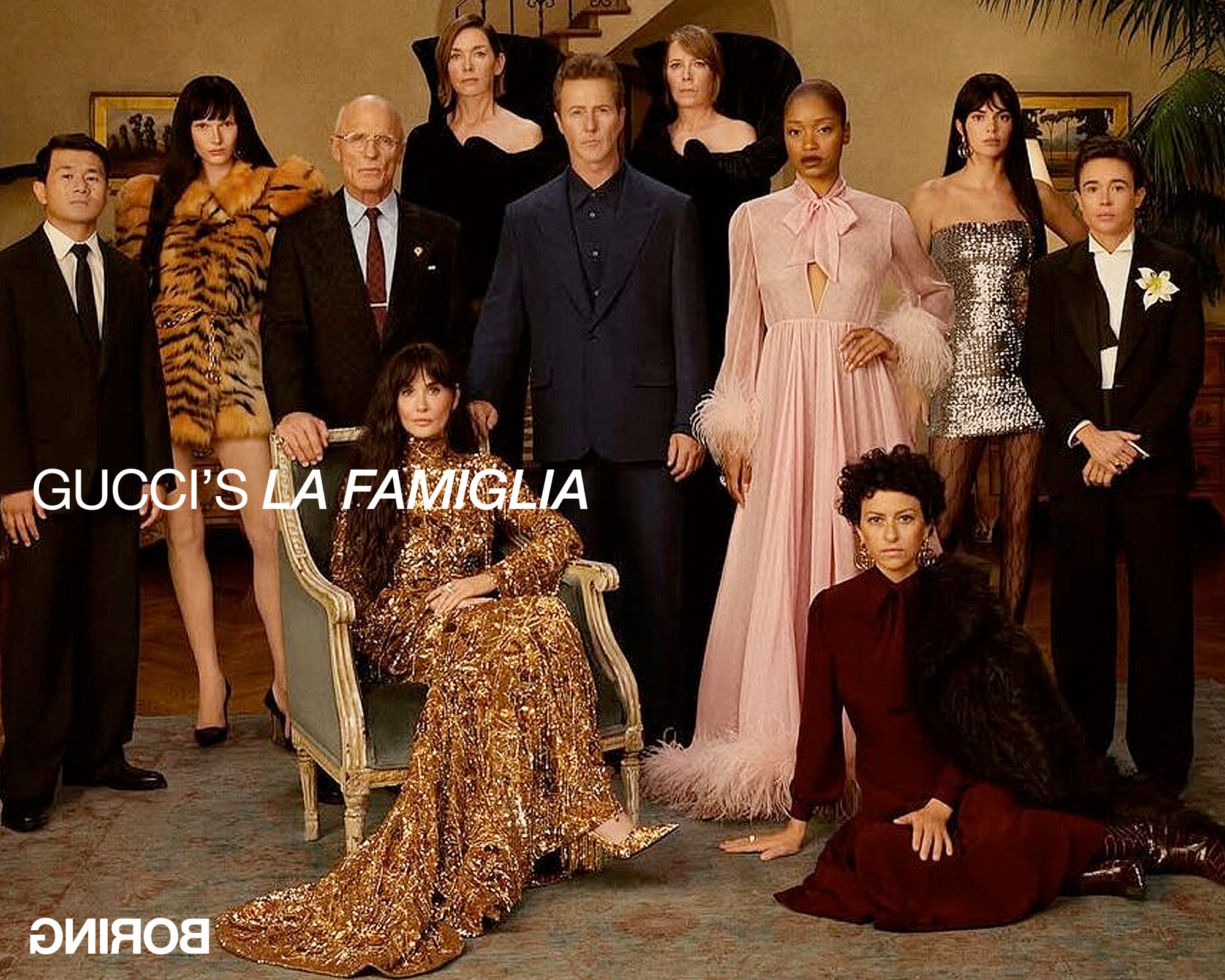
Demna’s 𝘓𝘢 𝘍𝘢𝘮𝘪𝘨𝘭𝘪𝘢 concept for Gucci got a lot of attention for looking less like a fashion collection and more like a line-up of film characters. The runway was full of instantly recognisable types: the mob wife, the power dresser, the hyper-polished social climber, etc. What made it interesting wasn’t the clothes themselves, but how quickly you understood the characters behind them.
This is something people who really “get” luxury have understood for a long time. In fact, I’m pretty sure it’s the reason Nino Cerruti hired us back in 1999. When I started working for him, I had zero experience in fashion or luxury, but plenty of experience art directing campaigns for films.
I often heard him comment on the fact that he loved designing costumes for films, because he liked dressing a personality more than a walking body on a catwalk. Interestingly, another brand we worked on for many years—Saint Laurent—have now turned this into their MO: their partnership with A24 has them designing costumes for one cultural hit after another.
People don’t buy products because of what they are. They buy them because of who they become. Estée Lauder said it a million times to all her employees: you’re not selling the product, you’re selling the person she wants to be.
There’s always a gap between someone’s current self and their ideal self, and that gap is where most buying decisions really happen. The gap opens the gate to a cinematic world your brand takes them to, in which they get to play with their identity. Bernard Arnault talked about it in many shareholder letters: the job of a luxury brand is to build desirability, and what people desire most isn’t the object itself; it’s the feeling of being the character who owns it. A handbag isn’t leather and stitching. A watch isn’t metal and gears. They’re props in the film someone projects to themselves about the character they’re looking to become.
One way to think about it is to imagine the consumer as Mario, the Nintendo character, and your product as the fire flower. Nobody wants the fire flower for its own sake. They want the fire flower to turn Mario into Super Mario. That’s, well, that’s the point! And yet, most brands are still obstinately selling the fire flower.
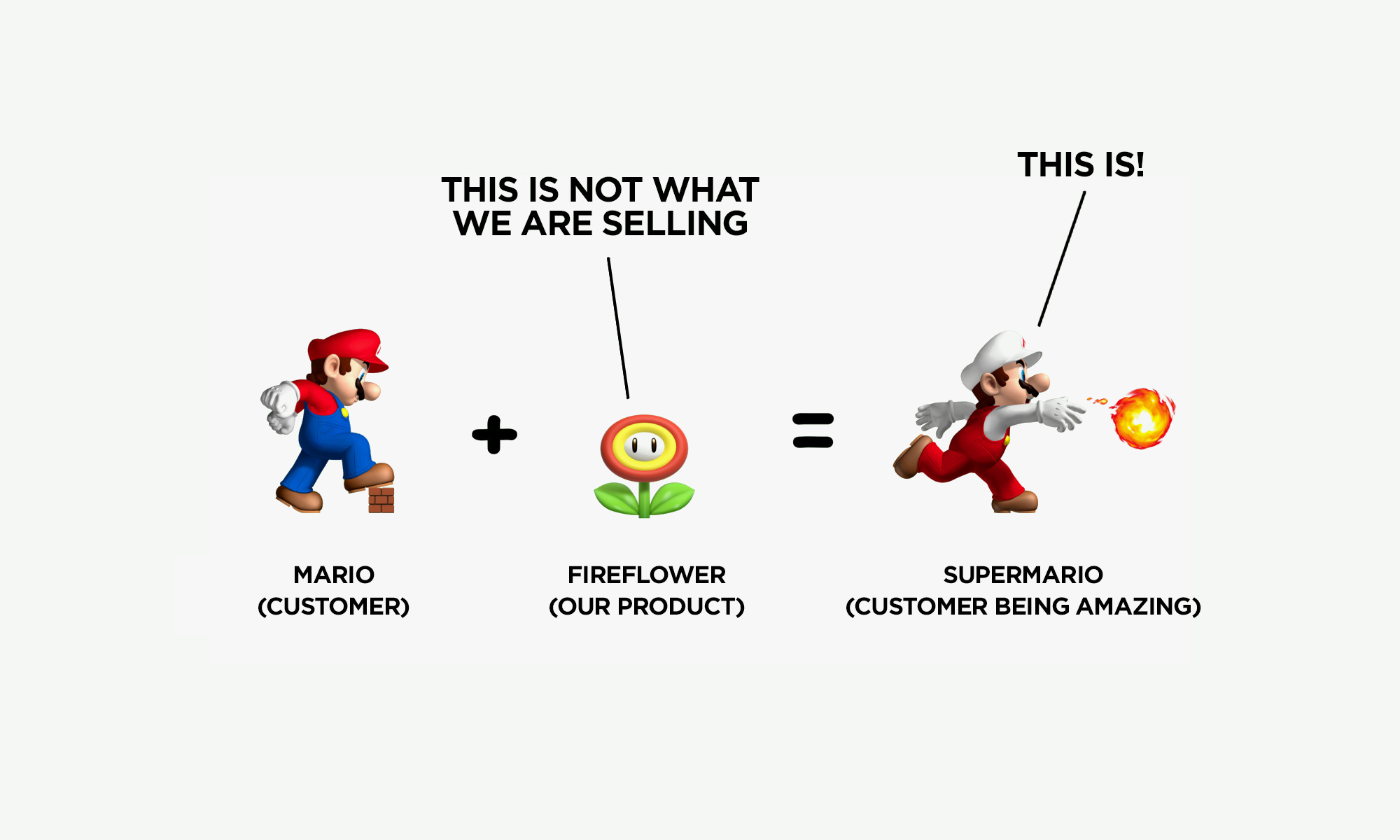
The customer isn’t really asking, “What do I get?” They’re asking, “Who will I be if this works?” That gap, between their reality and their imagined identity, is where your brand’s world exists. When a brand fills that gap, the decision to buy feels obvious.
The reason 𝘓𝘢 𝘍𝘢𝘮𝘪𝘨𝘭𝘪𝘢 works is not because the styling is clever, but because the identity is clear. You see the character, and you know whether you are that person, want to be that person, or wish you were brave enough to be that person. That clarity creates desire faster than any list of features ever could.
For anyone building a luxury brand, the takeaway is simple: offer a version of the customer they want to exist in the world as. If you can describe that version clearly, people move toward you without much convincing. If you can’t, no amount of better copy or prettier branding will fix it.
People don’t buy the product. They buy the Self that comes with it.
Brilliant 🌟 you nailed it as usual 💫When Estée Lauder made that statement, it encapsulated the true mark of luxury for me.. The product is no longer just a cream or serum, it becomes a tool for transformation..
Buying THE PURSE or THE WATCH that makes one feel they’ve attained SUCCESS or makes them feel SEEN is the hallmark of Luxury, and that is what Bernard Arnault meant by desirability, the need for elevation.
Personally, luxury has always been about elegance.. the kind embodied by the women I admired in my childhood, beginning with my mother … her effortless elegance exuded simplicity and always included 1 or 2 elemental and timeless, luxury pieces, understated yet transformative…