



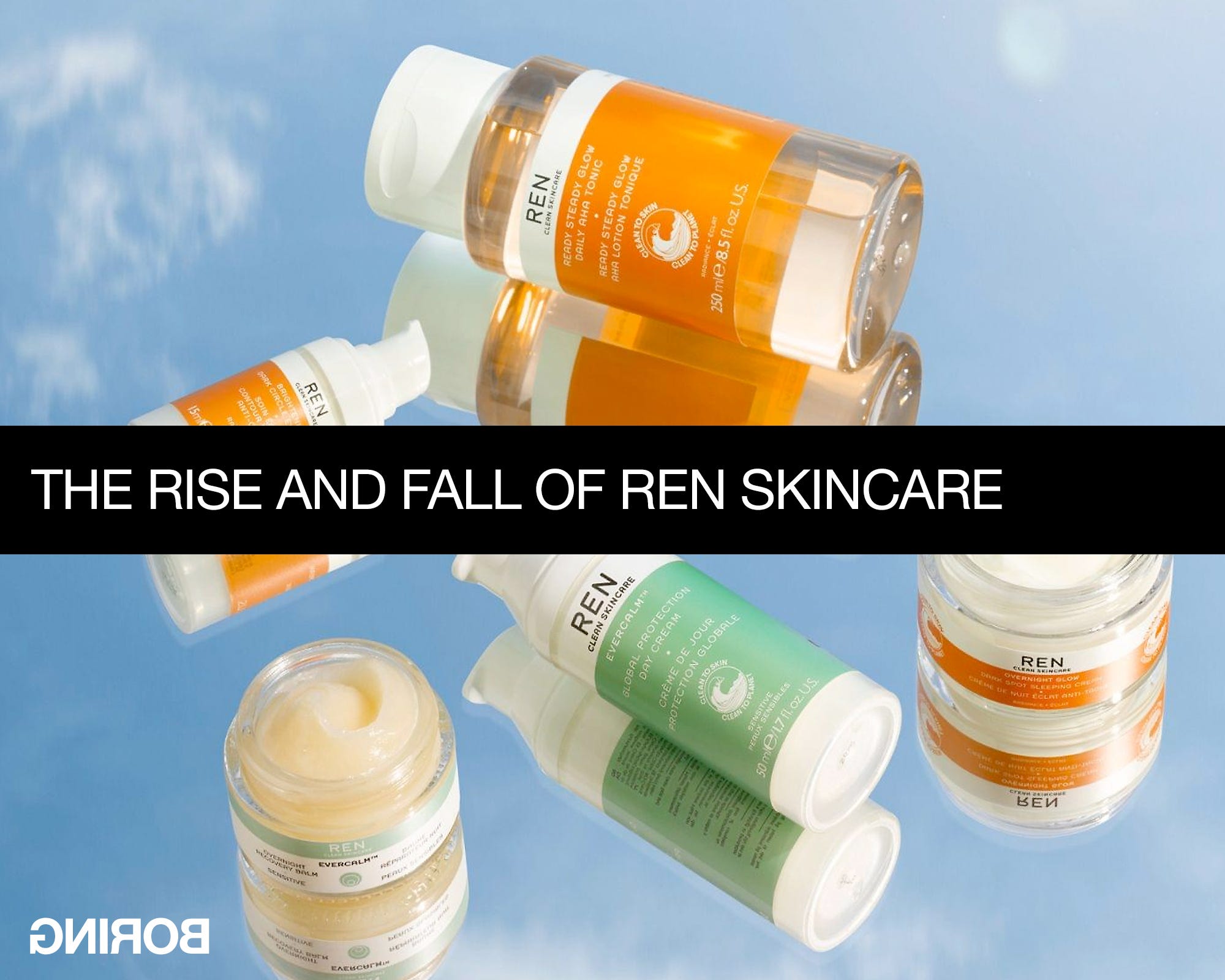
About a year ago, REN—once the brand leader in the clean beauty category—closed its doors. The company’s rise and fall provides an excellent case for clear and strategic thinking when the barriers to entry drop and your market becomes ultra-competitive. So, let’s take a deeper look.
1. The rise
REN was founded in 2000 by Robert Calcraft and Antony Buck to provide a solution to a problem that the market couldn’t remedy: Antony’s wife, who was pregnant, started having allergic reactions to her skincare products, which prompted Antony and Robert to explore the possibility of an irritant-free skincare range that actually worked.
The premise was simple: skincare that works, made from ingredients that aren’t bad for you. Clean skincare.
In a world where the average functional skincare product will contain anything from carcinogens to hormone disruptors, you can imagine what an easy sell this was. Especially because, at the time, the alternatives made from natural ingredients were mostly perceived as being a bit woo-woo.
What I really liked about REN was the simplicity of the proposition. “Ren” literally means “clean” in Swedish, and I remember one of the brand films Robert showed me about ten years later. Here it is:

A woman goes to swim in a beautiful, pristine lake somewhere in Sweden.

A man meets her in the lake.

They kiss.

They make love.

In full ecstasy, she dives backwards into the water.

Cut to the edge of the lake. They’re sitting together, blissful.
He asks “How do you feel?”

She replies “Ren.”
So far, so good. We have a brand that rests on a simple concept: “clean”. And we have a fun way for the brand to express how that concept feels. How do you feel? Ren. Even though it’s not an actual word in the English language, you kind of feel like it should be. In a previous essay, I’ve talked about words that turn the lights on in your head. Ren is definitely one of those.
Robert talked at length about how he wanted REN to feel. The idea alone that a skincare and cosmetics brand could focus on being a vector for a distinct feeling—feeling ren—was, in my view, the most valuable part of the whole strategy. Because, ultimately, that’s the goal of a beauty brand, isn’t it? Make people feel like a slightly upgraded version of themselves.
2. The fall
I’m going to start this part with a quote from an article by Philippe Silberzahn, professor at EMLYON business school:
“Faced with uncertainty, many organisations need to reinvent themselves. And this is precisely where they risk losing their way. For when familiar landmarks disappear, the instinct is to seek out ready-made models: industry best practices, “professional” management, a purpose statement, ... The underlying mindset is one of conformity as survival strategy. Yet, by succumbing to conformity, a company gradually becomes a pale imitation of its competitors, often a poorer version. It loses its uniqueness at the very moment when it needs it most.”
REN was bought by Unilever in 2015, which pretty much coincides with the time we started to see some very rapid changes in the world of cosmetics and skincare. Chinese manufacturers made it easier for new brands to start-up, the barriers to entry fell, and the competition went up to 11. Purpose-led branding became a trend and multiple beauty brands started one-upping each other on an ever-changing set of virtues and purposes.
Unilever, surrounded by what seemed like unpredictable changes in the market, went into reactive, conformist mode. Having started with a strong conviction about REN, they quickly began to doubt the “clean skincare” proposition, believing it was somehow no longer enough to differentiate the brand.
As a result, they did what Professor Silberzahn described: dropping the strategy and communicating the same messages as everyone else, just to “keep up with the Joneses”.
The advertising and communications started to echo every new trend in the sector—eco, carbon neutral, fairtrade, inclusive, etc.—until the brand turned into an insipid soup of copycatted messages... The complete opposite of differentiation, and the complete opposite of the feeling of “ren” that had been cultivated for 15 years. Notice, in the advert below, the recurring word “we”: we are this, we are that. It’s all about “we” and no longer about you.
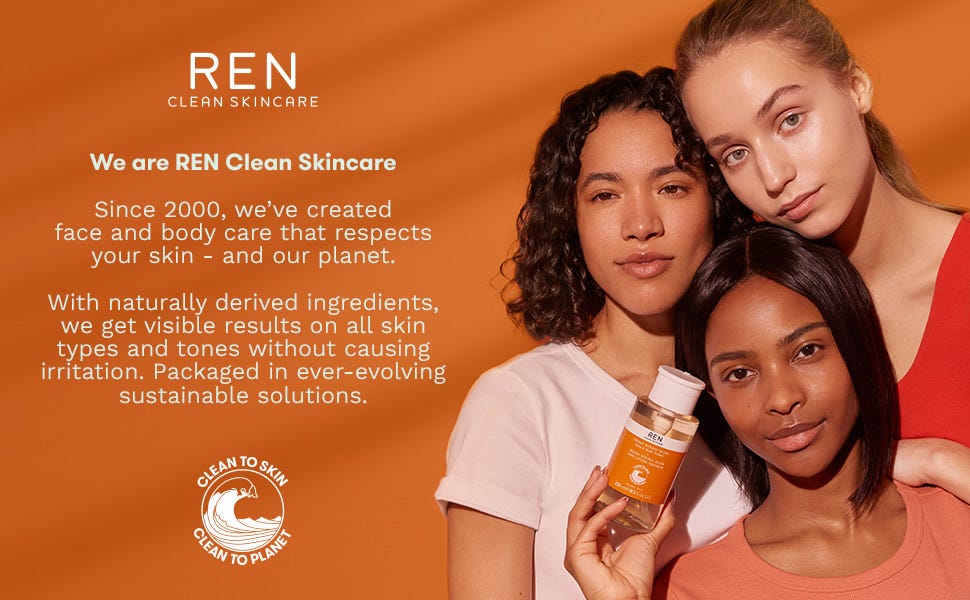
Year after year, we saw a loss in brand equity, which eventually resulted in the company closing its doors.
3. Post-mortem
Now, there are two points to pay attention to:
The first is about the mimetic nature of ultra-competitive markets: everyone pretty much copies everyone else and turns to clichés (a.k.a. intellectual commodities) in the hopes of pulling customers from their competitors.
The second is about how to win in such an environment. REN just followed what everyone else was doing; what should they have done instead?
Ad break: sign up to GNIROB and let’s get on with the essay.
3.1. The rise of mimetic signalling
Let’s look at the first point.
If you’ve paid attention to the beauty sector for the past decade or so, you’ll definitely have noticed it going through what some will describe as a moral awakening, and others will describe as a mild identity crisis. To the point where beauty is no longer allowed to just look beautiful, or even to focus on your beauty being the source of its virtue: it has to be inclusive, socially aware, culturally sensitive, and ideally capable of solving at least one global crisis before being allowed anywhere near your skin.
The weird consequence of all these ideological acrobatics is that, in beauty, the concept of beauty has somehow managed to become controversial.
It’s a bit weird if you think about it. Something that used to be aspirational and emblematic of the sector as a whole is now treated with suspicion. The word itself is constantly under scrutiny, as though beauty should have to justify its right to exist before it can be expressed.
And, sure, some of that evolution may have been necessary. The industry wasn’t exactly flawless before. The fact alone that REN was successful by offering a functional product using ingredients that weren’t bad for you tells you something about the industry’s state before they arrived on the scene: beauty products have no business meddling with ingredients you should keep as far away from your skin as possible.
But by infusing all these ideological purposes, the hordes of new beauty brands have made us forget what it was for, generating what is essentially an identity crisis.
Originally, beauty had a job, and I think REN were spot on with their initial proposition. To use Clayton Christensen’s terminology, the “job in the consumer’s mind” was really simple: attract, inspire, and make people feel like an upgraded version of themselves. It’s an intrinsic value, the diametric opposite of the extrinsic virtues the new beauty brands are attaching to themselves.
Nowhere is this identity crisis more obvious than in how new beauty brands actually look. At the exact moment when luxury skincare prices are climbing into orbit, the ubiquitous aesthetic seems to be a toning-down of anything that might look too indulgent, too refined, too obviously luxurious. Because heaven forbid a product should look expensive while being expensive.
Through this combination of purpose messaging and minimalist packaging, the industry ends up performing an odd trick: charging luxury prices while pretending it’s not doing luxury. A kind of visual disclaimer. “Yes, this face cream is £200, but look how humble it is.”
Meanwhile, outside the beauty bubble, the rest of humanity is doing just fine with beauty and beautiful things. We admire stunning architecture. We obsess over beautifully designed cars. We drool over fashion, watches, furniture, things that don’t downplay their own intrinsic excellence, and certainly don’t let that intrinsic quality be hijacked by extrinsic virtues.
We understand, instinctively, that beauty can be aspirational without being offensive. That it can provoke desire without committing a moral crime. So why is the beauty industry the only one acting like it got called into the principal’s office?
I think it’s something to do with the “swagification” of beauty products that’s happened as the barriers to entry in the market have dropped. The products aren’t so much products in their own right, they’re merch. The equivalent of a T-shirt you bought after a rock concert.
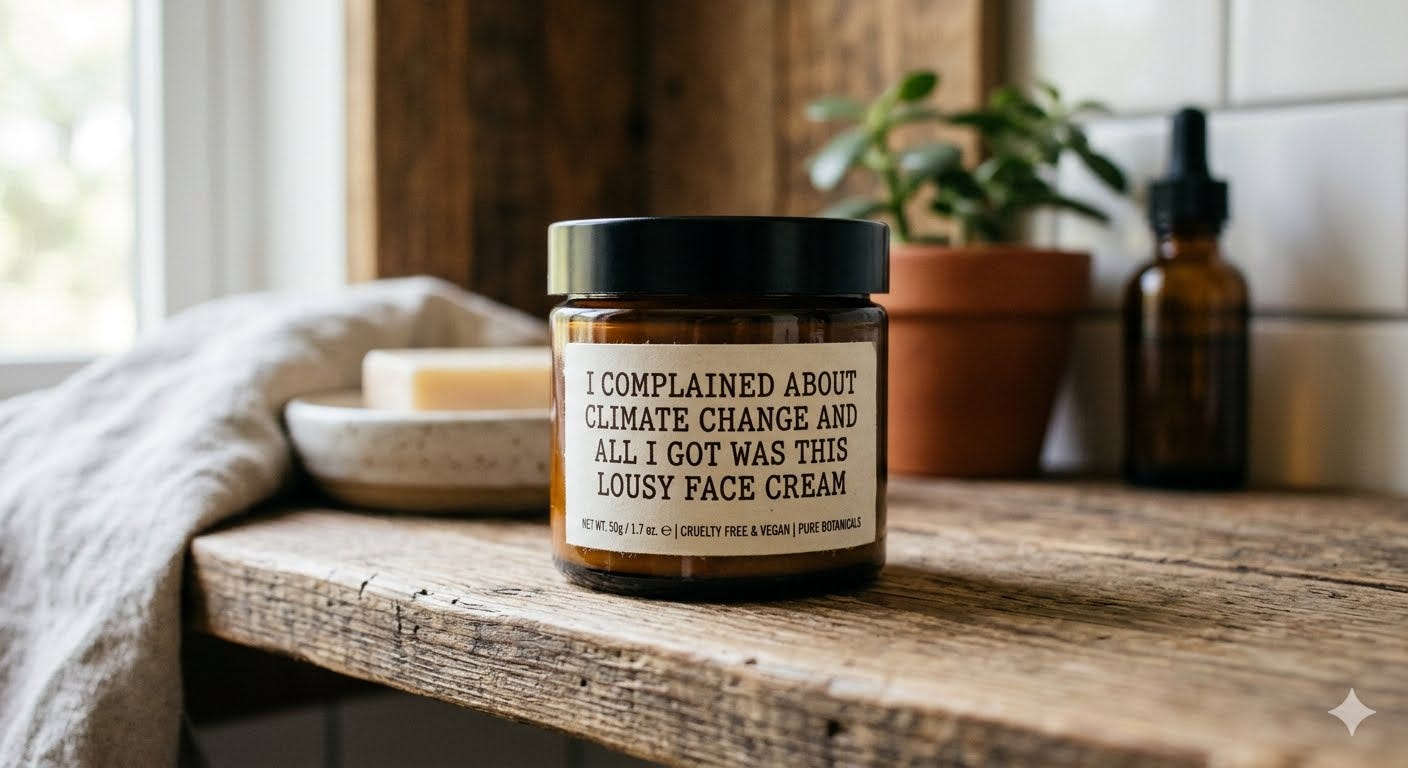
The new beauty brands being launched aren’t brands cultivated by people who are particularly interested in beauty, just like the rock band members aren’t particularly interested in T-shirts, and the barriers to entry in the beauty market are now low enough for them to launch and keep on signalling their extrinsic virtues.
As a result, the sector is now tangled up in a web of assumptions about class, inclusivity, identity, all of which seem to require constant negotiation. The upshot is that beauty has been expanded to include everything except the unapologetic pursuit of beauty itself. Aspiration is suspicious. Refinement gets labelled elitism. Excellence gets toned down, just in case it makes anyone uncomfortable.
3.2. How to win
The upside—because there is one—is that this creates an opening. Which takes us to the second point: what should a brand like REN have done instead?
Well, there is a big, obvious gap in the market for anyone willing to stop overthinking and remember something profoundly simple: humans like to look good.
The beauty industry is old. Older than the wheel. Arguably as old as “the oldest profession in the world”. And through every cultural shift, trend cycle, and philosophical detour, one thing has remained stubbornly consistent: humans like to look good. They want to feel attractive. And, yes, the definition of “attractive” may evolve. But the desire itself does not.
This is basically the same logic behind Jeff Bezos’s favourite business insight: focus on what doesn’t change. Here’s what he said back in 2006: “Everyone is obsessed with what’s going to change in the next ten years, when it’s so much better to build our business on the things that are never going to change”. He was referring to the fact that nobody in ten years (or ever) would complain that Amazon’s customer service was too good, or that their prices were too low, or that their delivery service was too convenient. But it’s an argument we could easily make about beauty, too: nobody will ever complain about being too beautiful.
Nobody will wake up ten years from now and complain their skin routine made them look too good. There is no future where someone says “Ugh, I wish I didn’t look this radiant.”
Which brings us to the conclusion that the real opportunity in beauty today is a brand that doesn’t twist itself into ideological origami. If you’re looking to start a new beauty brand, you could just focus on the 21st century’s version of what beauty itself has always done: attract, inspire, and make people feel like an upgraded version of themselves
Seeing things through this lens, we can see the mistake many brand analysts have made in the past year, arguing that REN closed down because “clean” is no longer enough to differentiate the brand, and that consumers nowadays want something the brand’s competitors own.
Nobody in their right mind would argue that, say, Volvo’s concept of “safe”, or DHL’s “speed”, are “no longer enough to differentiate the brand”. If anything, the cumulative effect of 50 years of communication discipline—finding ever new ways of expressing that one clear value—is the moat. It’s something that’s near-impossible for any competitors to replicate.
And nobody in their right mind should be telling a beauty brand that’s been successful for 15 years on the back of “clean skincare” that its brand concept is “no longer enough”. The whole point of proper branding is precisely to own a concept that’s short, simple and emotionally resonant in the consumer’s mind, and then keep running with it decade after decade.
Because, in an ultra-competitive market, the only thing of true value is brand salience.
Simply put, if you can be the brand that owns “clean beauty”, and spend 15 years developing that little bit of real estate in the consumer’s mind, you will own a category entry point, a mental shortcut in the consumer’s mind that says “this is what I need to do next” whenever that particular thought pops into their head. Just like “I need a fast courier” leads you to the natural conclusion you should call DHL, and “I need a safe family car” leads you to book a test drive with Volvo.
These mental shortcuts are built over many years of discipline around expressing one single concept and finding new ways to make that one concept interesting.
So, what should REN have done in the face of a rising tide of mimetic new beauty brands? Simple: carry on carrying on, continue being the brand that owns the “clean skincare” category in the consumer’s mind.
And when I say “simple”, I don’t mean that it’s easy. Quite the opposite, it’s one more example of the simplest things being the hardest to do. But it’s the only strategy that aggregates value over the long term, because it addresses the only thing that matters: the intrinsic value we build up over the years by focusing on the one and only job we have been chosen to perform in the mind of the consumer.
PS: many thanks to Lee Gilbert for originating the idea behind this essay, and for your feedback on every version, too.
If you liked this essay, sign up to GNIROB.

Thank you Alex for your objective input and insight! You gave value, eloquence and expertise to my humble Op-Ed, as I knew you could. 🙏💫
I love the visuals particularly the Face cream messaging 😂 I look forward to more co-creating and co-inspirations.