


One way to gauge the value of your brand is to ask a very simple question: would people miss it if it was gone?
More generally, who do people miss, and why? Let's see if we can learn something here.
In the last few years, the most famous person passing away was probably the Queen. She was unique, iconic and irreplaceable. The fact alone that nobody ever needed to say which queen they meant tells you just how unique she was.
Have you ever asked yourself why the Queen always wore single-coloured outfits? And so bright! How many people—other than David Bowie—can you imagine looking great in a Kermit green suit the way she did on her platinum jubilee?
The reason is very simple: standing in a crowd, wearing a bright, single-coloured outfit made her instantly distinctive and vividly memorable, even from a distance. Different in a sea of sameness.
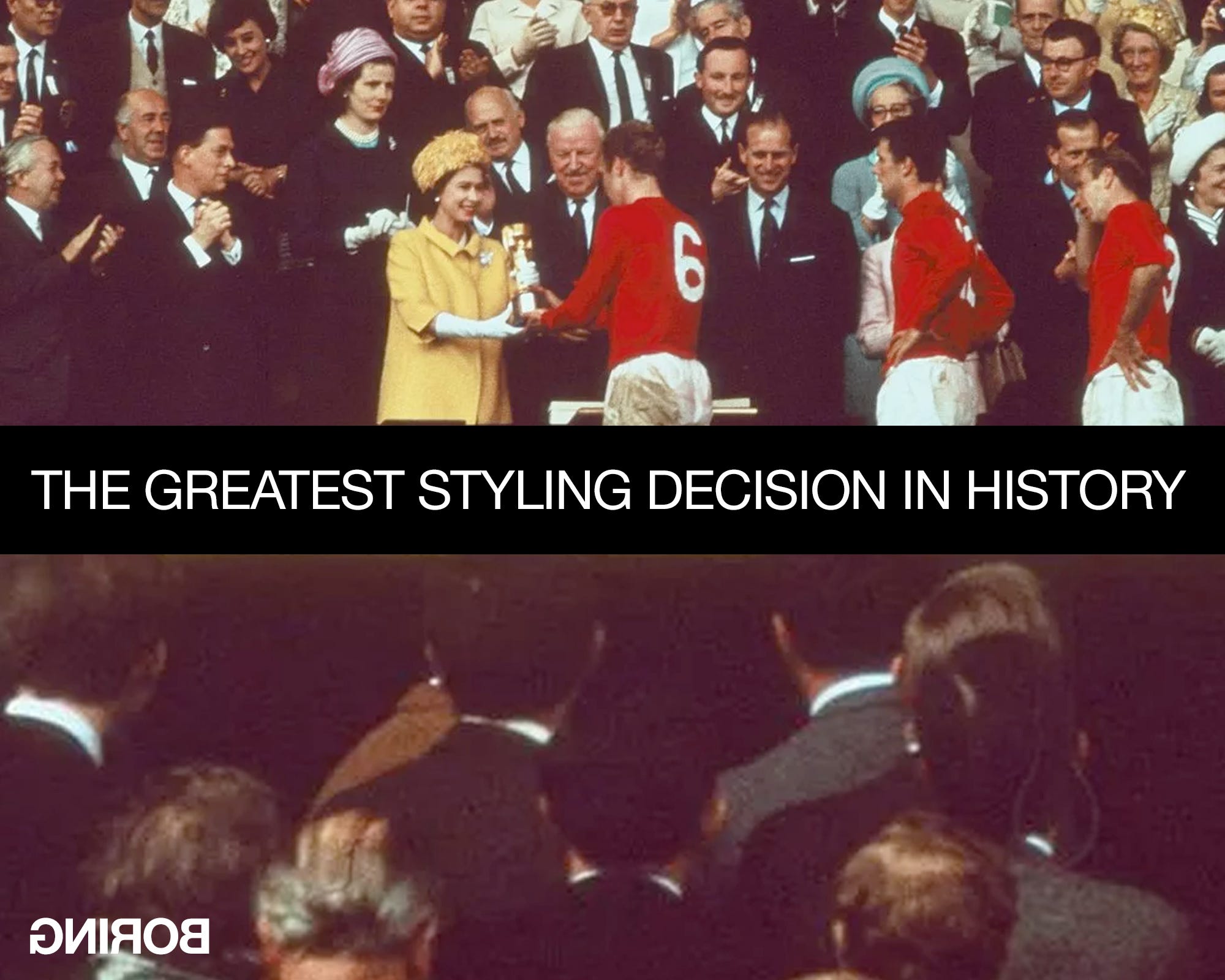
The photo below was taken at England’s World Cup victory in 66. There are only two things to look at in a sea of indistinguishable people: the England team in red, and the Queen in gold.
As she hands out the golden trophy, she looks like the source of gold the trophy is made of. In effect, they're winning a bit of her glory. Whoever made this styling decision deserved an instant knighthood.
Can you imagine what this picture would have looked like if the Queen had just worn some outfit similar to the other women in the crowd?
Of course, it's easy to think this is just about appearances. But, as I have often argued in these essays, a brand's appearance is a by-product of what it is. In other words, you can get extra leverage if your distinctiveness and your differentiation line up. At the studio, our most successful brand identity designs have always been the ones most tightly connected to what the brand is about. If we know what it is, we know how it should look.
Why is it important that these two aspects should be lined up?
Because time is a friend to authentic brands, and an enemy to phoney brands.
Put simply, it takes decades for something unique and iconic to become irreplaceable. And it’s impossible to sustain a public image for decades without aligning how one is with how one appears.
Different in a sea of sameness. It's worth repeating this in the context of the question asked above: would people miss us if we closed shop? In a world where almost everything is interchangeable, people miss that which:
1. is unique.
2. looks iconic.
3. has grown to become irreplaceable.
The lesson is so simple that it’s going to sound self-evident: build something unique, and make it look iconic. Sustain that effort for a few decades and you, too, will grow to become irreplaceable.