


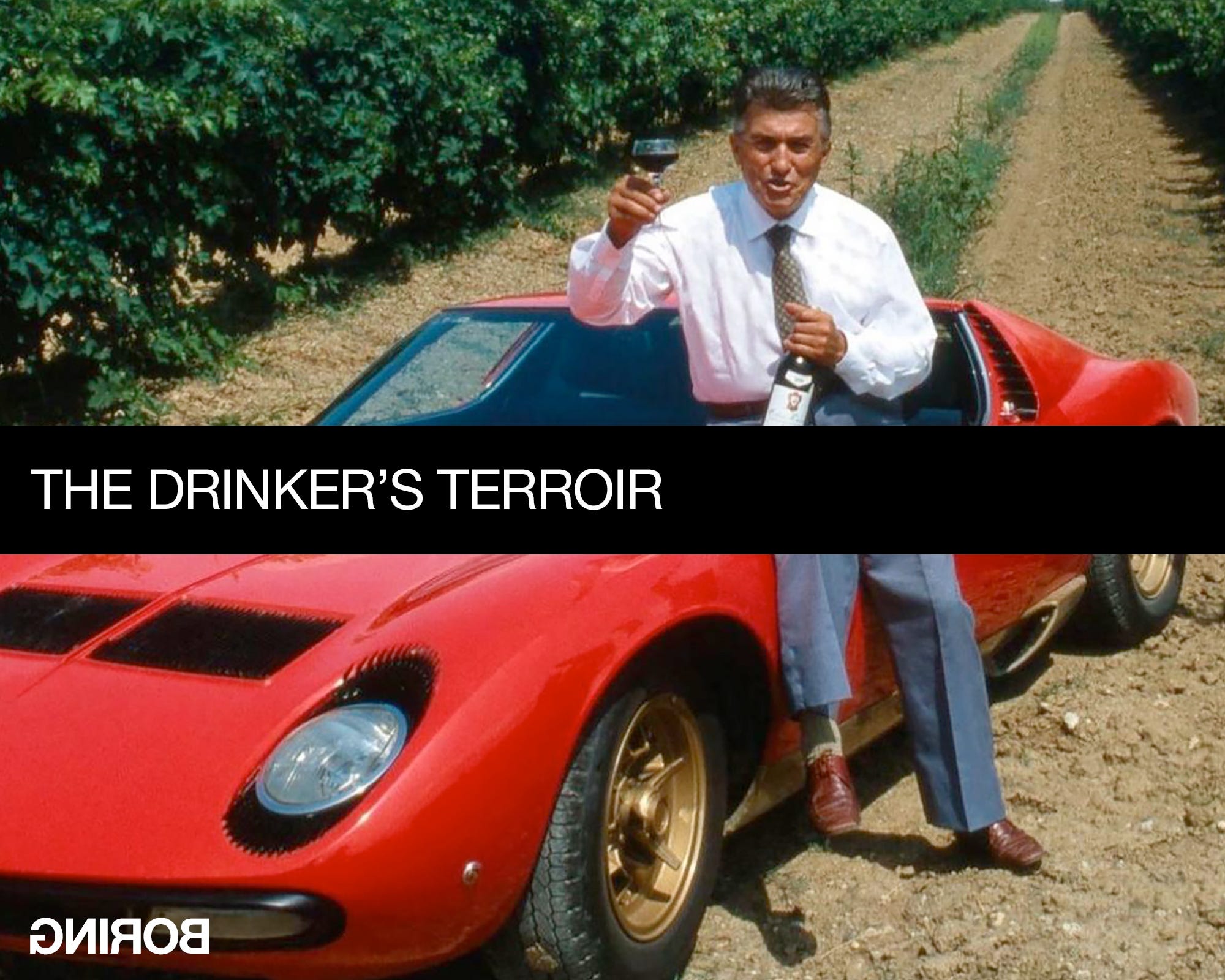
PART 1
This week, we’re looking at wine, an industry so trapped in its own mimetic echo chamber that it’s practically yelling at itself in a barrel room. And we’re going to figure out how to uncork (heh…) something far more powerful: a drink that’s crafted not in your vineyard, but 𝗶𝗻 𝘆𝗼𝘂𝗿 𝗱𝗿𝗶𝗻𝗸𝗲𝗿’𝘀 𝗺𝗶𝗻𝗱.
So, let’s get started with something that’ll probably annoy 99% of my readers in the wine industry:
𝘐𝘵 𝘥𝘰𝘦𝘴𝘯’𝘵 𝘮𝘢𝘵𝘵𝘦𝘳 𝘩𝘰𝘸 𝘭𝘰𝘷𝘪𝘯𝘨𝘭𝘺 𝘺𝘰𝘶 𝘥𝘦𝘴𝘤𝘳𝘪𝘣𝘦 𝘺𝘰𝘶𝘳 𝘩𝘢𝘯𝘥-𝘩𝘢𝘳𝘷𝘦𝘴𝘵𝘦𝘥, 𝘴𝘶𝘯-𝘥𝘳𝘦𝘯𝘤𝘩𝘦𝘥, 𝘤𝘰𝘰𝘭-𝘤𝘭𝘪𝘮𝘢𝘵𝘦, 𝘩𝘪𝘨𝘩-𝘢𝘭𝘵𝘪𝘵𝘶𝘥𝘦, 𝘴𝘶𝘴𝘵𝘢𝘪𝘯𝘢𝘣𝘭𝘦, 𝘣𝘪𝘰𝘥𝘺𝘯𝘢𝘮𝘪𝘤, 𝘳𝘦𝘨𝘦𝘯𝘦𝘳𝘢𝘵𝘪𝘷𝘦, 𝘧𝘢𝘮𝘪𝘭𝘺-𝘰𝘸𝘯𝘦𝘥 𝘷𝘪𝘯𝘦𝘺𝘢𝘳𝘥.
Why?
Because everyone in the wine industry says exactly the same thing. If you’re using the same words as everyone else, your signal will drown in the noise.
Wine is perhaps the most mimetic industry on earth. Everyone speaks the same sacred language, worshipping the same trinity: Terroir, Tannins, Tradition.
Presenting your wine this way is like showing up at a party where everyone’s wearing the same black turtleneck, and insisting your turtleneck is special because it’s a slightly different shade of black.
What’s more, it’s the drinking equivalent of “selling a ¾ inch drill instead of a ¾ inch hole”: you’re selling from what you know, not from what the consumer desires.
Meanwhile, a brand like Yellow Tail gate-crashes the party wearing neon pink and says “Hey guys, who wants something fun with their barbecue?” Who invited them? We don’t know, but they’re the life of the party.
Yellow Tail didn’t chase points on Robert Parker’s list. They didn’t court the wine snobs. They realized that 90% of drinkers aren’t looking for a wine to pair with their existential angst about minerality; they’re just looking for something simple and joyful to go with grilled chicken and summer salads.
Yellow Tail said: “You know what our wine tastes like? Happy.”
And that’s why they sold millions while the rest of the industry was left debating why one wine got 93 points and the other 94.
Now, why is this so important? Because when you sound like everyone else, you get treated like everyone else. Which means:
- You get shoved into price comparison sites.
- You get stacked on shelves where only the discount sticker gets noticed.
- You become a hostage to rating systems and scores.
PART 2
Four legs goood, two legs baaad! We argued in Part 1 that the herd-like behaviour of 99% of wine brands turns them into hostages of price comparison sites and wine rating institutions (e.g., Robert Parker).
So, let’s start Part 2 by taking a moment to enjoy the absurdity of wine scores.
Imagine rating fine art the way wine is rated by Robert Parker:
Van Gogh’s Sunflowers: 93 points.
Picasso’s Guernica: 94 points.
Absurd, isn’t it? Have you actually learned anything about these amazing artworks from the score? No? So, then, why let your value be defined by a number instead of a meaning?
Is it the nostalgia of the classroom that makes so many wine producers keen to get a mark from some kind of surrogate schoolteacher?
If so, growing out of this childish pursuit is an opportunity for you: given that 99% of wine brands are all chasing this—and appealing to a tiny market of conformist wine snobs as a result—here’s your chance to shine. Really shine.
Let’s detour briefly into the world of... circuses. Yes, circuses. Stick with me.
Back when you were a kid, going to the circus meant lions, trapeze artists, and clowns.
Then, as fewer people started to care, circuses started an arms race:
- Hire crazier acrobats!
- Buy bigger elephants!
- Get longer shoes for the clowns!
And profits collapsed anyway.
Enter Cirque du Soleil. They looked at the circus death spiral and said: “We’re not competing with clowns. We’re competing with Broadway.” Their only overlap with circuses is that they hire acrobats and funny people. That’s it.
Cirque du Soleil reinvented the category by refusing to fight in the old arena. They made something so beautiful and enchanting that it competed with theatre, opera, and musicals.
Now, let’s return to wine.
If you want real differentiation, stop obsessing over your terroir. Start obsessing over 𝘁𝗵𝗲 𝗱𝗿𝗶𝗻𝗸𝗲𝗿’𝘀 𝘁𝗲𝗿𝗿𝗼𝗶𝗿.
PART 3
Let’s start Part 3 by defining 𝗧𝗵𝗲 𝗗𝗿𝗶𝗻𝗸𝗲𝗿’𝘀 𝗧𝗲𝗿𝗿𝗼𝗶𝗿 properly, because it’s going to change how you see your brand.
The Drinker’s Terroir is not your vineyard. It’s the landscape inside your customer’s mind. It’s the nostalgia of a countryside road trip with their best friends. The romantic date night where they want to feel effortlessly cool. The Ibiza beach sunset where rosé tastes like liquid sunshine.
When people drink your wine, they’re not tasting your limestone soil. They’re tasting their own context. Who they’re with. What mood they’re in. Whether they’re wearing shoes or dancing barefoot in the kitchen.
In this context, your Bordeaux isn’t competing with another Bordeaux. It’s not even competing with another wine. It’s competing with G&Ts, with craft beer, or with the magical phrase: “I’ll have what you’re having.”
Your real terroir battle isn’t in the vineyard. It’s in the drinker’s mind. That’s where you plant the seeds of desire.
Let’s look at a brand that gets this. Castillo de Ibiza makes rosé. But they don’t sell it by talking about grape varietals or aging in stainless steel. They sell a fantasy. The golden sunset. The DJ spinning. The glittering Mediterranean. Their bottle whispers: “You’re not drinking wine. You’re sipping on Ibiza itself.”
That’s the drinker’s terroir. And it’s way more powerful than your clay subsoil and south-facing slopes.
You know who worked this out a long time ago? Cigarettes.
Let’s go back to the 20th century. When cigarettes were banned from making health claims, they pivoted hard. Marlboro stopped “selling tobacco”. What did they sell instead? Freedom. The rugged cowboy. The open range. The fantasy that lighting up makes you untouchable.
And sales exploded. Because people don’t buy products with their rational brain. They buy with their desires, their insecurities, their cravings to be someone else, even for a moment.
If Big Tobacco can figure that out, so can wine.
PART 4
In Part 3, we defined 𝘁𝗵𝗲 𝗱𝗿𝗶𝗻𝗸𝗲𝗿’𝘀 𝘁𝗲𝗿𝗿𝗼𝗶𝗿, making the point that you should stop defining your brand concept with wine clichés (terroir, tradition, etc).
So, what do you talk about instead?
You talk about what your drinker wants to feel:
Happy.
Free.
Chilled.
Rebellious.
Creative.
Romantic.
Jovial.
Cultured.
Fashionable.
Effortlessly cool.
There’s a different wine brand for every one of those concepts. All you have to do is equate your wine with a simple and emotionally resonant concept in order to become your drinker’s answer when someone asks: “What are you drinking?” Then, stick with that concept and riff with it for a couple of decades until you own that category in the drinker’s mind.
Let’s pick one of these: rebellious. Create a wine that says: “Drink this when you feel like breaking the rules.”
How far could you take this concept? Well, you could break the rules of your geographic appellations: blend grapes from different regions. Or—why not?—different continents. Why should a GSM blend (Grenache, Syrah, Mourvèdre) be confined to the Rhône? Imagine mixing Australian Syrah with Spanish Garnacha and French Mourvèdre. Would the snobs faint? Sure. Would drinkers get curious? Absolutely. Curiosity beats conformity.
Now, let’s be clear, I’m not advocating you should destroy your heritage in favour of some wild adventure that doesn’t feel authentic to you. The point here is to find something authentic about you that is interesting and emotionally resonant, and see how far down the road to singularity you could take it. Because it needs to be understood that, from your drinker’s point of view, your real competition isn’t another Bordeaux. It’s everything else that’s fighting for space in the drinker’s glass. And what goes in the drinker’s glass is what’s in the drinker’s mind.
So, stop selling your soil. Sell your drinker’s fantasy. Next time you’re tempted to brag about your sun exposure or your 93.5 Parker points… Pause, and ask yourself:
- Where does my drinker want to be when they sip this?
- Who do they want to become for those few golden minutes?
- What fantasy am I helping them step into?
Your job isn’t to sell fermented grape juice. Your job is to sell a moment, a mood, a magic little shift in someone’s day. Those things live in the drinker’s terroir. That’s where desire blooms. That’s where names mean something. That’s where brands stop being commodities and start being culture.
Brilliant