

The business case for beauty
How beauty and start-up culture have a lot more in common than you think.

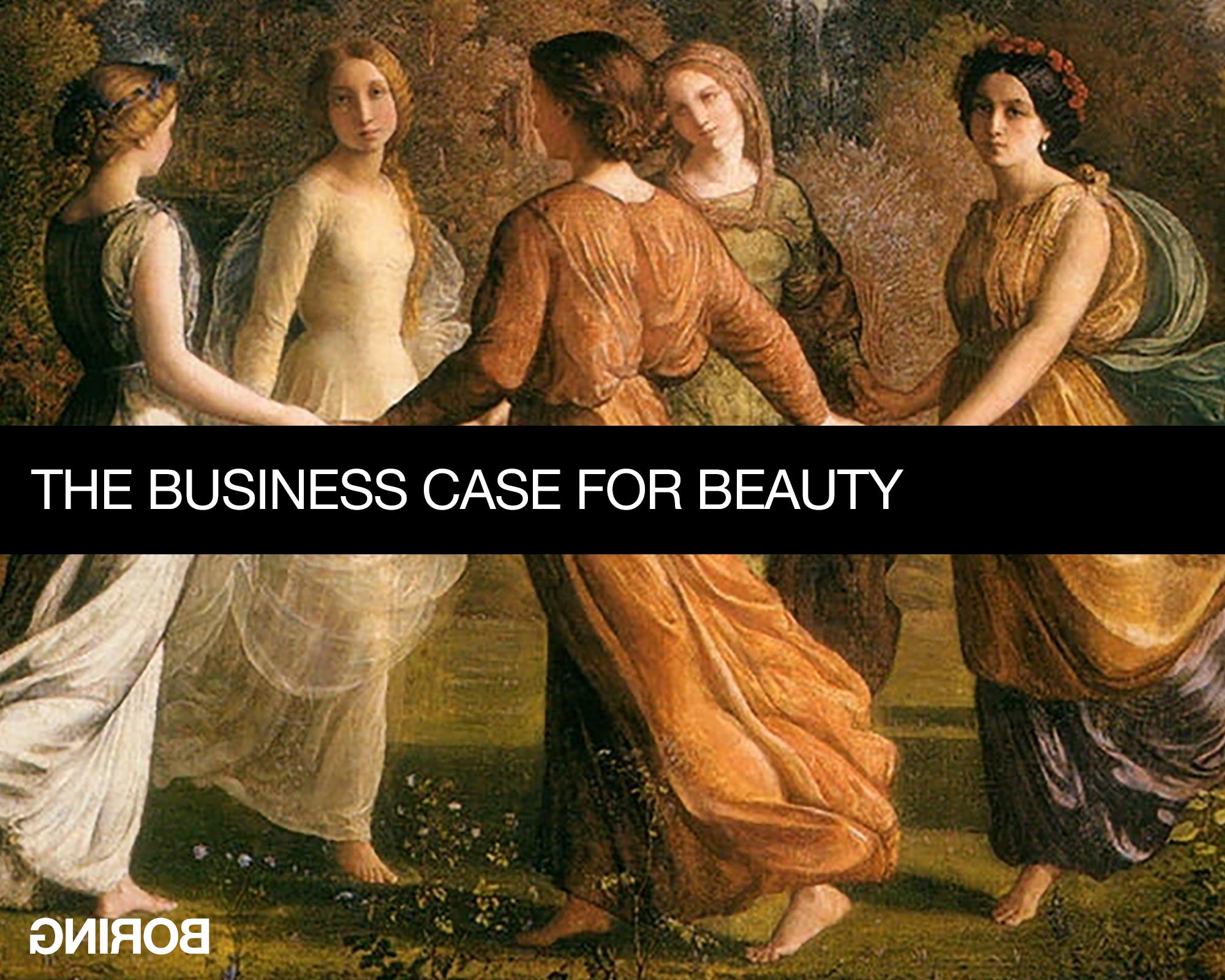
Remember the crush you had on that popstar when you were a teenager? Try to write down the reasons for your crush. Most likely, it’ll be something ineffable. Some kind of weird combination of disparate elements. Their poise. The way they stood, sat or moved. The way they flicked their hair, ...
Humans are emotional animals. We like things for reasons that are mostly ineffable and unmeasurable.
Imagine, for example, that you met the love of your life on a train: would you want your journey to be over quicker? Or would you want it to last all night so you could spend more time getting to know each other?
Trainlines can’t guarantee you’ll meet the love of your life on them, of course, but what if everything on board was designed with the sole purpose of being beautiful? A place you actually want to be in? A place you look forward to be in? A few years ago, I took Belmond’s Andean Explorer train from Cuzco to Puno. Every moment on board was a joy.
The weird thing is that it got me to realise there is no reason commuter trains from London to Oxford shouldn’t be equally joyful. If we don’t have the billions to make trains faster, what if we made every second on them delightful instead? How much value could be created if beauty were a KPI?
There is a kind of beauty that triggers a deeply emotional connection, and that creates deep value out of it.
For example, when Frank Stephenson pitched the Nuova 500, FIAT only had enough cash in the bank to keep the lights on for another 18 months or so. So, one of the main reasons they went for it was that the car was going to be built on the already existing—and thus fully homologated—Panda’s chassis. This was the only way a new car could even be developed in 18 months instead of the usual 3 to 5 years. A choice made by necessity lead to FIAT’s best-selling car ever. A massive payoff.
So, the business case for beauty is definitely there.
At the same time, it’s very difficult to put numbers on the effect it will have on your business. Its impact can be orders of magnitude greater than other options, but it’s never going to be an easy pitch in a boardroom, because it attracts a very different kind of investor. One who “doesn’t need to weigh an elephant to know it’s an elephant”, as Warren Buffet put it in one of his stockholder letters.
In that respect, companies focusing on beauty and delight have a lot in common with start-ups, especially the ones that really go for disrupting the entire status quo in a particular sector: investors in them can’t put a number on the business’s eventual value, but they know it could be billions. Precisely because business-by-numbers leads their competitors into a massive blind spot for the things you can’t measure, and the opportunities that come with them.
Beauty in business is disruptive, and very much the domain of the underfunded underdogs. So, if your budget is limited and you’re looking to make a big impact in a sector filled with boring brands, look for the disruption opportunity in beauty and delight.
PS: speaking of boring brands, GNIROB is a substack on branding and design dedicated to the opposite of boring. If you enjoyed this essay, subscribe.