


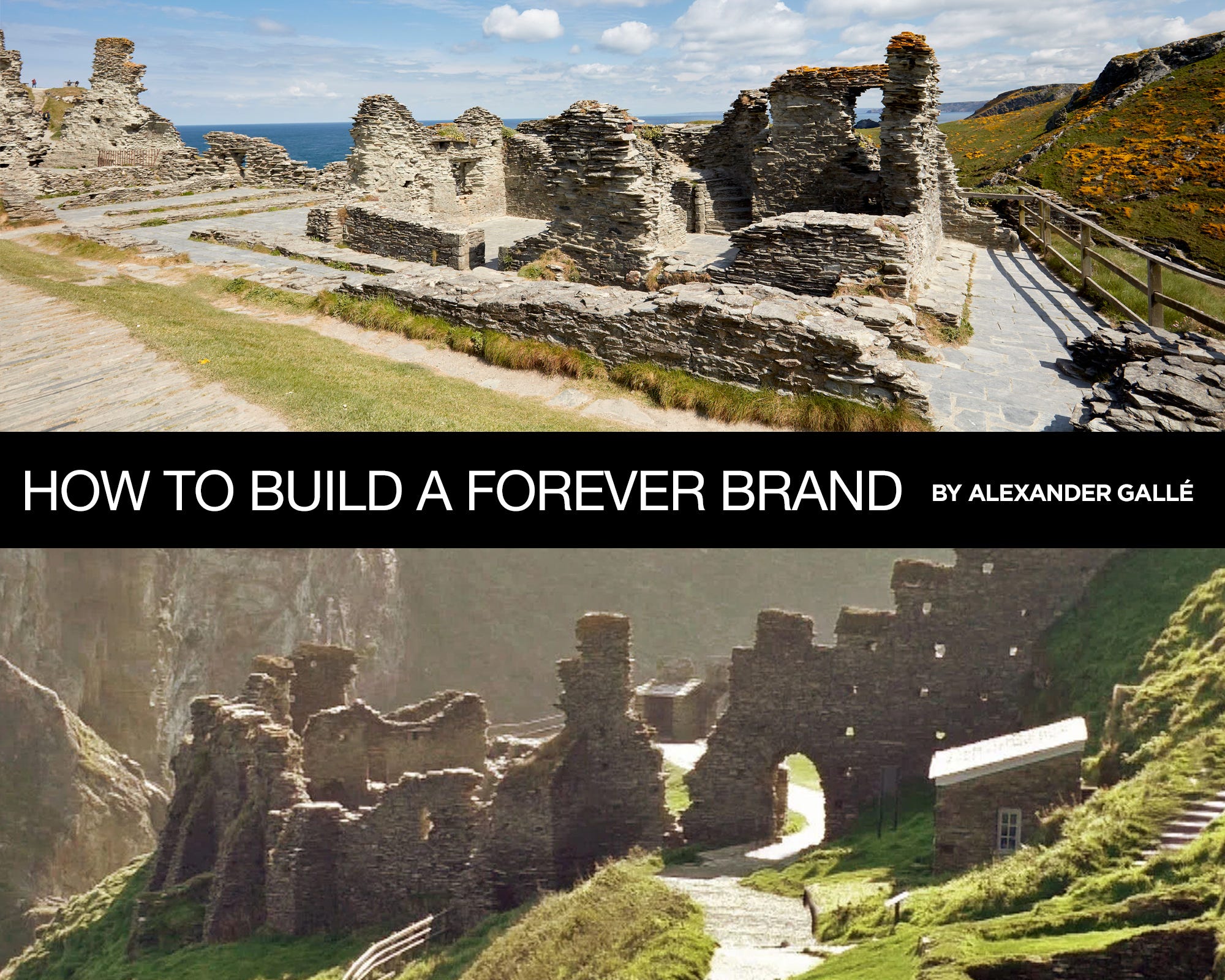
The castle in these pictures is Tintagel Castle. It was built in the 13th century by Richard, the 1st Earl of Cornwall.
Tintagel Castle has no military value, at all. Its position is of no strategic consequence, in military terms. What it does have going for it is that it was built where the legendary King Arthur is supposed to have been born. This is one hint at the reason it was built.
The castle was built in an architectural style that, even at the time, was considered very old: nobody built castles like that in the 13th century. This is another hint at the reason it was built.
Richard was a son of King John (a French Plantagenet king) and Isabelle of Angoulême. He was styled Comte de Poitou, and given Cornwall for his sixteenth birthday by his brother, King Henry III. The revenues from Cornwall made him one of Europe’s richest men.
He had little use for military strategy in Cornwall.
What he did need, however, was to secure his descendants’ position as Earls of Cornwall, by getting the local population to accept it as a normal and natural state of affairs, something that had been that way for so long it was inconceivable it could be any different.
In other words, he needed provenance and heritage.
This, then, is the reason why Tintagel Castle was built: to weave the Norman nobility into the cultural fabric of Great Britain. An emotional connection needed to be created between the kings of popular folk tales and the kings the folk paid their taxes to.
The strategy may have been costly, but it’s clearly paid off. To this day, the greatest landowners in the United Kingdom—and the highest ranked aristocrats—are descendants of the Normans who took over the country nearly a thousand years ago.
In fact, the longer the strategy has held up, the more powerful it has become. Nassim Nicholas Taleb calls this phenomenon “The Lindy Effect”: the longer something has survived to exist, the longer its remaining life expectancy.
After so many centuries, it’s become simply inconceivable that anyone else should sit on that throne. The discussion, if it happens at all, is never about “these royals vs. other royals”, but about “these royals vs. no royals”.
Time is a good friend to timeless brands: the only thing that will uproot them is a complete disruption of the sector itself they have come to dominate.
So, it really pays to dig deeper—much deeper!—and come up with a psychologically and culturally informed brand concept, rather than limit yourself to modern and fashionable ideas and aesthetics.
To really understand the long-term approach to branding, what resources you should spend on it, and what its value is to your business, look at the resources someone like Richard was willing to spend on a militarily useless castle, and the payoff it has earned him and his descendants over the centuries.