


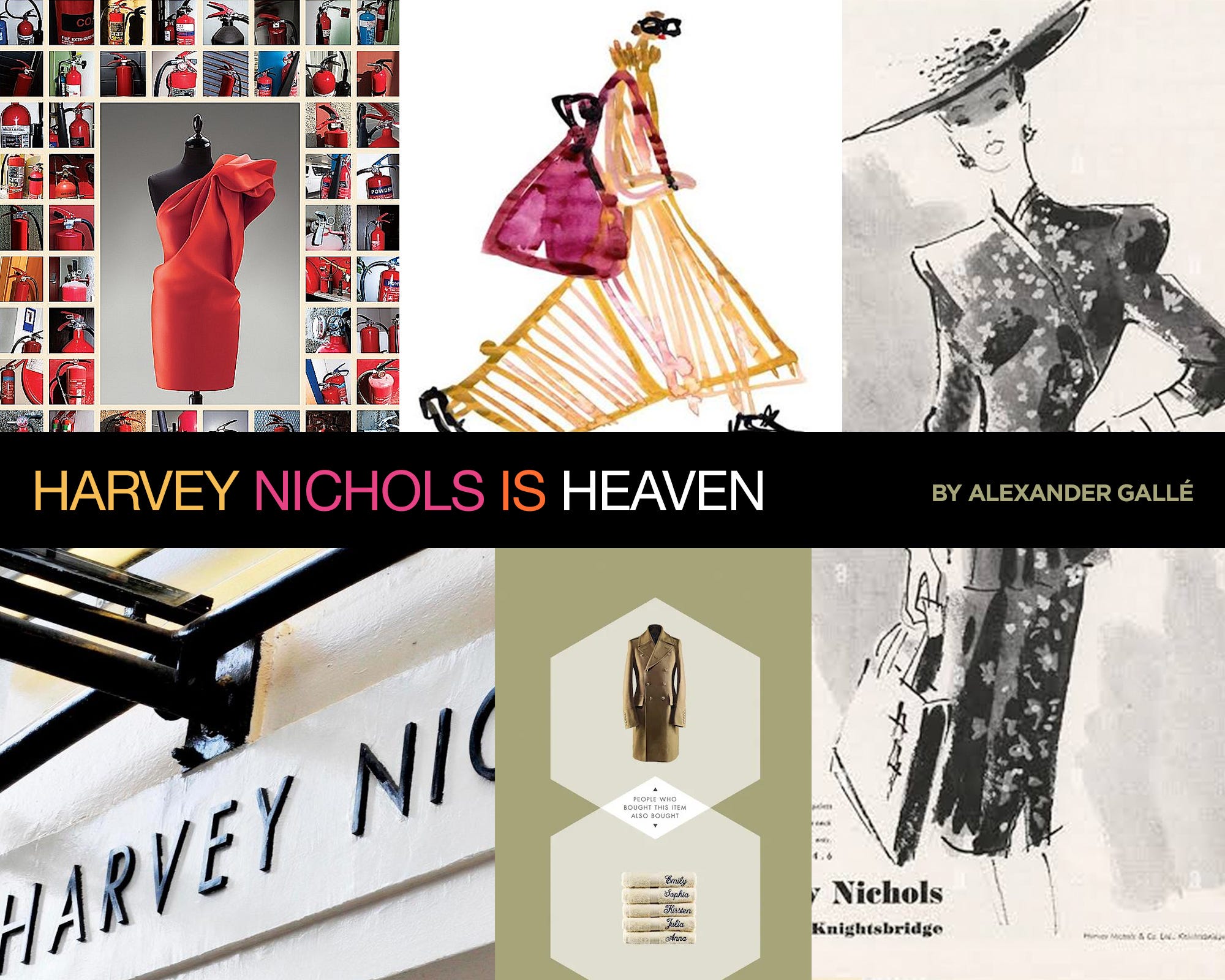
The Harvey Nichols takeover presents a great opportunity to work out how to create more value from an ailing brand than the price at which it is being bought.
So, let’s have some fun with Harvey Nichols.
“Fun” is important here. At the studio, we often describe what we do as “serious play”. It’s essentially the grown-up version of “let’s play x”, where x might be jewellers, winemakers, eyewear makers, swimwear designers… We immerse ourselves in a world until we discover the thing that is so fundamental to it, yet so invisible to the people inside it, that it’s like water to a fish. If we’re lucky, that discovery becomes the idea around which a client can build a genuinely differentiated brand.
The problem with cultural icons such as Harvey Nichols is that they can become so deeply embedded in the culture that the people running them forget what the brand actually represents in the collective imagination.
So, let’s take the name away and replace it with something else desirable.
Fortunately, Harvey Nichols has already done most of the work for us.
Harvey Nichols = HN.
HN = Heaven.
Funnily enough, “Heaven” is not such a ridiculous description when you consider the current situation: according to Mike Ashley, Harvey Nichols is bleeding cash and heading towards a death spiral. Where does one generally aspire to go to after a death spiral?
Heaven.
So, let’s play a slightly ridiculous game and imagine that Mike Ashley hasn’t bought Harvey Nichols. He’s bought Heaven.
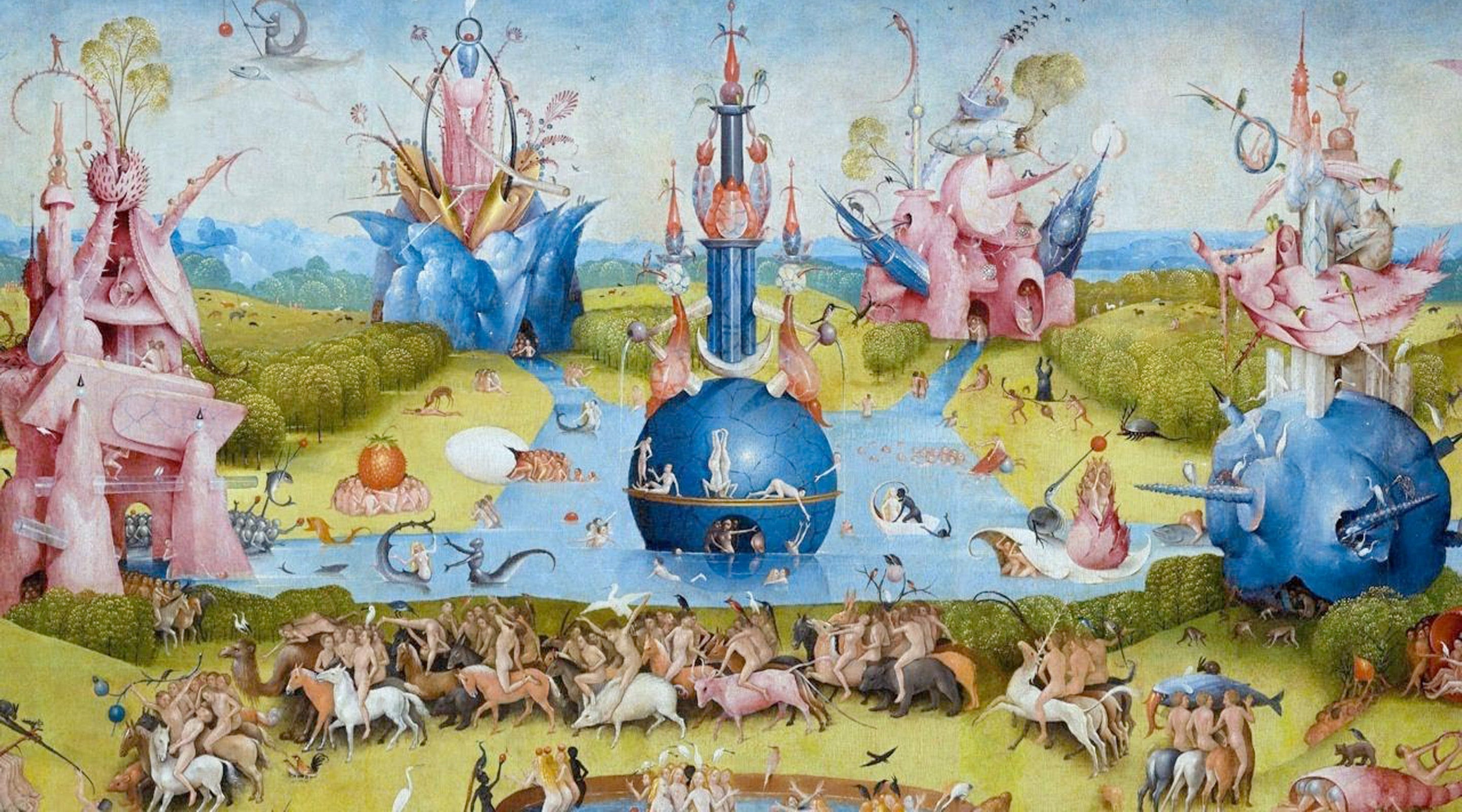
We can picture it as something like Hieronymus Bosch’s Garden of Earthly Delights, to get a really good sense of the idea’s grandiosity.
Suddenly, some of the proposed changes make perfect sense. Absorb the subsidiaries into the Fraser Group. Return to a single, original flagship store in London. Why? Because Heaven isn’t two places. It isn’t three places. As Belinda Carlisle has been kind enough to explain, “Heaven Is A Place On Earth”. One place. And that place is 109–125 Knightsbridge, London.
Now, if we’re going to run Heaven, we should probably understand why people want to go there in the first place.
The first thing we know about Heaven is that its appeal is partly defined by its alternative, Hell.
London isn’t exactly Hell, obviously. But parts of it do occasionally make you want to escape at high speed. The Underground is literally under the ground, which feels like the sort of branding detail Hell itself might have commissioned.
And then there’s the crowds. So many people! And they’re all in your way!
Heaven has other people too, of course. But they’re the right other people. They’re “good”. What makes them good is that they’re people like you. Or, more accurately, people like the person you aspire to become.
Which means Heaven needs standards. We can’t simply let everybody in. That would be a catastrophic mistake. Heaven would gradually become Hell, and in the world of department stores, there is already a very obvious H-word available for that: Harrods. Or, more specifically, Harrods under Al Fayed: the place summed up beautifully by Yogi Berra’s immortal observation, “nobody goes there anymore, it’s too crowded”. Too crowded with the wrong people.
Because Heaven isn’t simply a place. The people in Heaven are what makes it Heaven. In theory, Heaven could be packed. The trick is to pack it with exactly the people you’d be delighted to find yourself surrounded by.
So, we have three ingredients.
First: Heaven is singular.
Second: Heaven is the opposite of Hell.
Third: Heaven’s inhabitants are people you aspire to be like.
In other words, Harvey Nichols could become something like an extreme version of a country you visit for the weekend and then start fantasising about moving to permanently. A country where people arrive, look around, and say: “I thought I’d died and gone to Heaven.”
Which brings us to the final question: What brings people to this Heaven?
The answer is simple: fashion.
If Harvey Nichols can become to fashionistas what Rome is to Catholics, and if we can turn that idea up to 11 for the next few decades, then we’ll have something considerably more powerful than a department store positioning.
We’ll have a destination. Popes may come and popes may go, but Rome will remain Rome.
Of course, we could now say: excellent, let’s bring the popes of fashion back to fashion Heaven.
There’s one small problem with that tactic: fashion’s popes are not idiots. They’re not going to stake their reputations on a place the pilgrims have stopped visiting. And fashion, more than almost any other cultural system, is obsessed with what is happening now. The past matters mainly insofar as it helps someone create something new: something that expresses the present and, ideally, gets to influence the future.
So how do we get the pilgrims interested again?
Well, who tells pilgrims to go to Rome?
The priests.
In the fashion world, the priests are the lecturers, graduates and emerging designers coming out of Central Saint Martins, Cordwainers, Chelsea College of Arts and the other schools that now make up UAL, along with the smaller design brands that appear, disappear and occasionally set London Fashion Week on fire.
The ambition would be to create something akin to what the Antwerp Six (plus Martin Margiela) achieved in the ‘80s. Forty years after they took their degree show on the road, Antwerp still has a thriving fashion ecosystem built around the Royal Academy’s Fashion Department... Incidentally, the Antwerp Fashion Museum is running an Antwerp Six retrospective this year. Go.
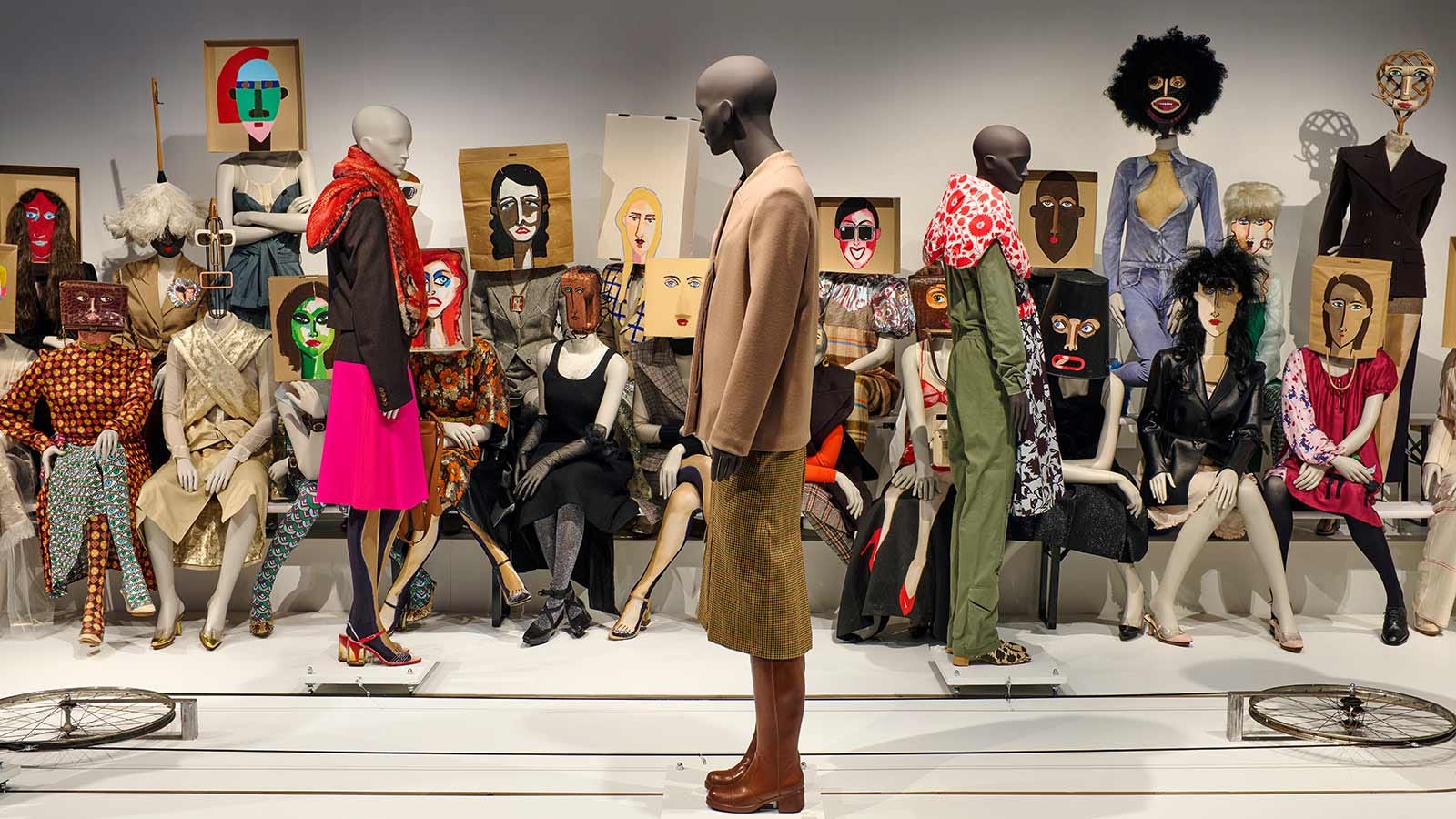
That’s the sort of ecosystem worth thinking about. And before anyone panics, I don’t mean turning Harvey Nichols into a giant clothes shop and throwing everything else out of the window. “Fashion” is a useful word here because it means more than clothes. Fashion is an expression of The Now. There are fashionable ideas, fashionable books, fashionable furniture, fashionable tableware, fashionable destinations, fashionable food and, naturally, fashionable cures for fashionable ailments.
So, when we describe Harvey Nichols as “fashionista Heaven”, we’re not necessarily talking about clothing and accessories. We’re talking about a place that captures The Now wherever The Now happens to be expressing itself.
“Fashionness” becomes a proxy for “nowness”. And “nowness” becomes a proxy for contemporary culture itself.
Suddenly, this gives Harvey Nichols something extremely useful: a point of view. It provides a Litmus test for deciding which products belong in the store, which brands deserve attention, what suppliers should be selected, and—perhaps most importantly—where to go looking for the suppliers of tomorrow.
So, this is what makes the Heaven idea interesting to me:
First: it’s short. Everyone can understand it: staff, suppliers, customers. Nobody needs a 47-slide brand strategy presentation to explain what Heaven is. Humanity has suffered enough.
Second: it’s emotionally resonant. Everyone has some idea of Heaven. They may disagree about the details, but nobody needs a PowerPoint explaining why Heaven is desirable.
And third: it’s fertile. The concept can keep changing without becoming incoherent. Heaven can reinvent itself endlessly while remaining recognisably Heaven. That means it can generate new interest while simultaneously accumulating meaning and salience over decades.
Which is exactly what you want from a brand idea: not a slogan, or a campaign, or another piece of marketing furniture. Rather, a place people want to go, and where the right people want to be seen in. A place that tells you something about who you’d like to become. I’m pretty sure, if Harvey Nichols could maintain that single concept for a few decades, it would become as valuable as some of the world’s biggest destinations.