

Antiques from the future
What is it that makes some objects considered antiques in a hundred years' time, while others end up in a landfill in less than one year?

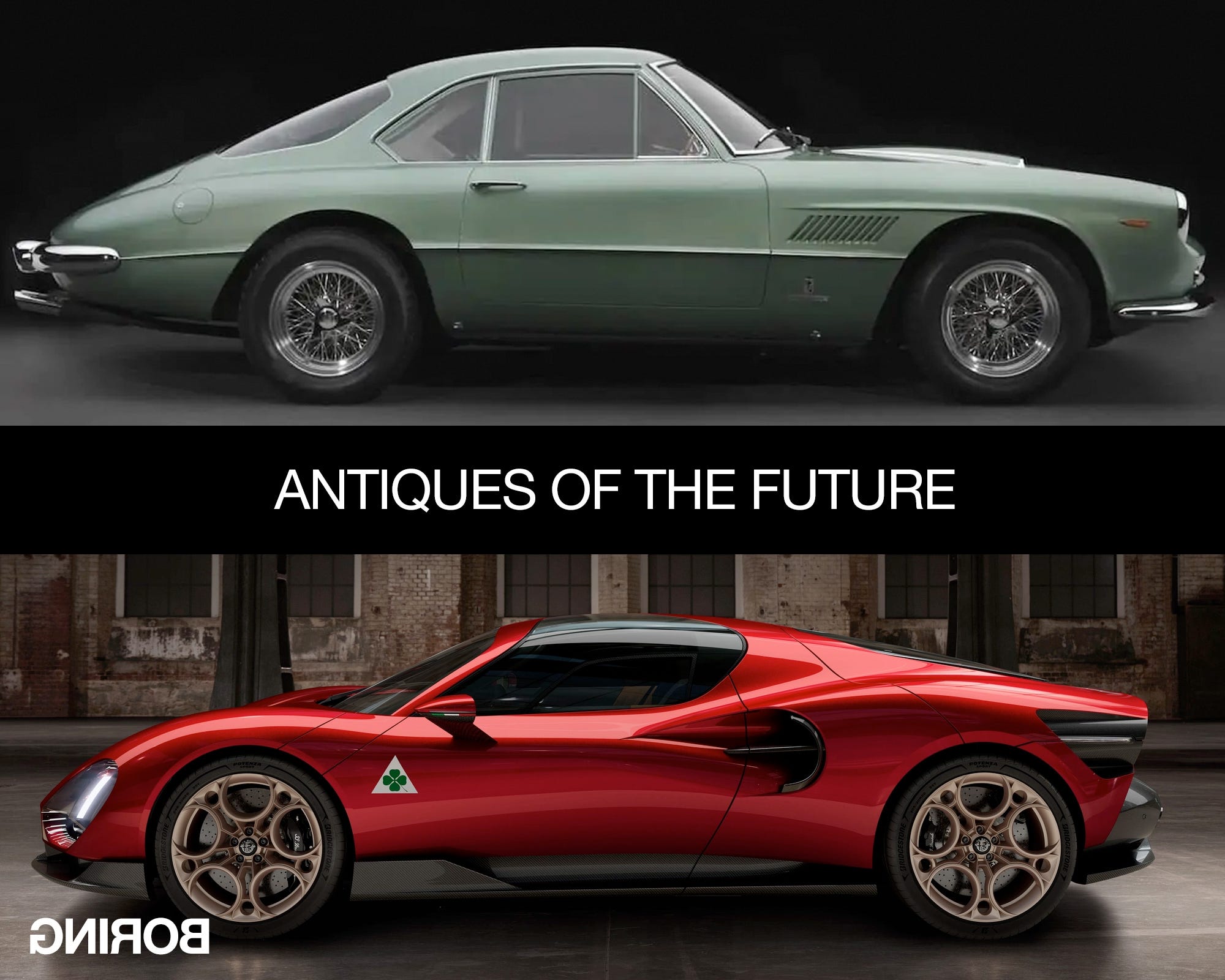
My recent essays on Ferrari have led to a number of very interesting discussions. Mostly around the concept of timelessness in design, and on the way desire can be cultivated simply by performing a certain archetypal role in society over many decades.
Of course, the latter implies a certain appreciation of the former: you simply cannot stay relevant (never mind desirable) over many decades unless you understand the undercurrents that transcend time and touch on something that goes beyond the trend. Something that satisfies a more fundamental desire. Look at the brands that do this consistently over 50 or 100 years and you’ll see the fundamentals of human fears and desires, themes that have been resonating since we first started gathering around fires.
So, this week, we’re going to look at timelessness in design.
And the first question we’re going to ask is simply ... why? What is the case for timelessness in design?
If you were, say, a brand that aims to make a sustainability argument the case could be really straightforward: we need to use fewer resources. To use fewer resources, we need our objects to last longer. To last longer, we need them to be timeless. And I don’t mean this in the sense that they should work well for a long time (obviously they should) but that they should extinguish the desire to be replaced with something new for a long time.
There’s a deeper reason, too. If we consider that the true, intrinsic value of an object is in its use, then it’s easily arguable that an object you use for 100 years before it ends in a museum is going to be orders of magnitude more valuable than an object you use for 1 year before it ends on a trash pile.
In the context of an argument I have often made—that we should always seek paths towards hypervaluation—the rationale then becomes: hypervaluation can be achieved by simply designing something to be quite valuable, but over an extensive amount of time.
So, in the context of car design (the reason I’m writing this essay in the first place) we could say that your car should look like you’re going to keep on being in love with it after 10 years the way you fell in love with it when you first bought it. Because, quite simply, if you love your car, if it’s the kind of car that evokes happy memories every time you get behind the driver’s seat, you’re less likely to want to replace it, and more likely to want to repair it.
Which, funnily enough, is exactly the way Hermès have defined luxury for a long, long time: luxury is that which is worth repairing. Luxury is the car you’ll never sell. Even your kids won’t want to sell it. In 100 years, it’ll be considered an antique, which is what brought about the title of this essay: antiques of the future.
Let’s spend some time looking at what you should be doing if you want to design timeless brands and objects.
What is it that makes some objects considered antiques in a hundred years’ time, while others end up in a landfill in less than one year?
Three things.
1. Legacy is part of the answer. One thing many people appreciate about, say, Porsche cars, is how they echo previous designs. Every new Porsche 911 fits in the family tree, the way you fit in your family tree, looking perhaps a little bit taller and healthier than your grandparents did at your age. And so, what ends up happening, is that an increased appreciation for the brand over the years translates into an increased appreciation for its vintage models. A Porsche 911 from 1972 will easily fetch as high a price as the latest models, making it unlikely that more than the occasional few would be thrown away.
2. Biomimicry is another part of the answer. As Frank Stephenson likes to say: “a horse will never look out of fashion.” So, if you’re looking to make products that will keep a certain appeal 50 or 100 years from now, you could do worse than to mimic designs that nature has spent many millions of years evolving into what we find beautiful. There’s even a good case to be made that we find them beautiful because we have ourselves evolved into finding them beautiful. Whatever the explanation, nature has clearly been into the design game for longer than you and I have, so it’s worth taking a few notes there.
3. Myth, I would argue, is yet another part of the answer. And I don’t necessarily mean this in a grandiose way. It just needs to weave its way into a mythologised form of your memories. So, part of what makes an object timeless is if it becomes something that wears in rather than wears out. We all have an object in our house that has acquired its value because of its connection to the people we love. This is the car my father drove on our road trip from Italy to Austria. This is the biscuit tin my grandparents saved their coins in during the Great Depression. This is the cigar box my great-grandfather brought over when he left Europe. That kind of thing.
So, there you go: three levers to push and pull in the context of your own brand, on your way to hypervaluation.
Other people’s newsletters are boring.
Ours is GNIROB.
Always thought provoking Alexander! Bravo 👏 I love how you tied timeless objects to emotional connections and memories. We have all kept objects from our past that make them unique and meaningful to us. And for me that’s what makes them valuable.. not commodity, not currency $$$$, or trend.. more like legacy❤️ remains of a cherished time and the people connected to it.
Such a thought-provoking topic! What do we consider timeless and what will be desirable in the future??
Over on my Substack I talk about antiques, design and culture so you might find something that interests you! I’d LOVE to chat and connect!😊